

Las corrientes
SYNOPSIS
Program Information
Stills


Critical text
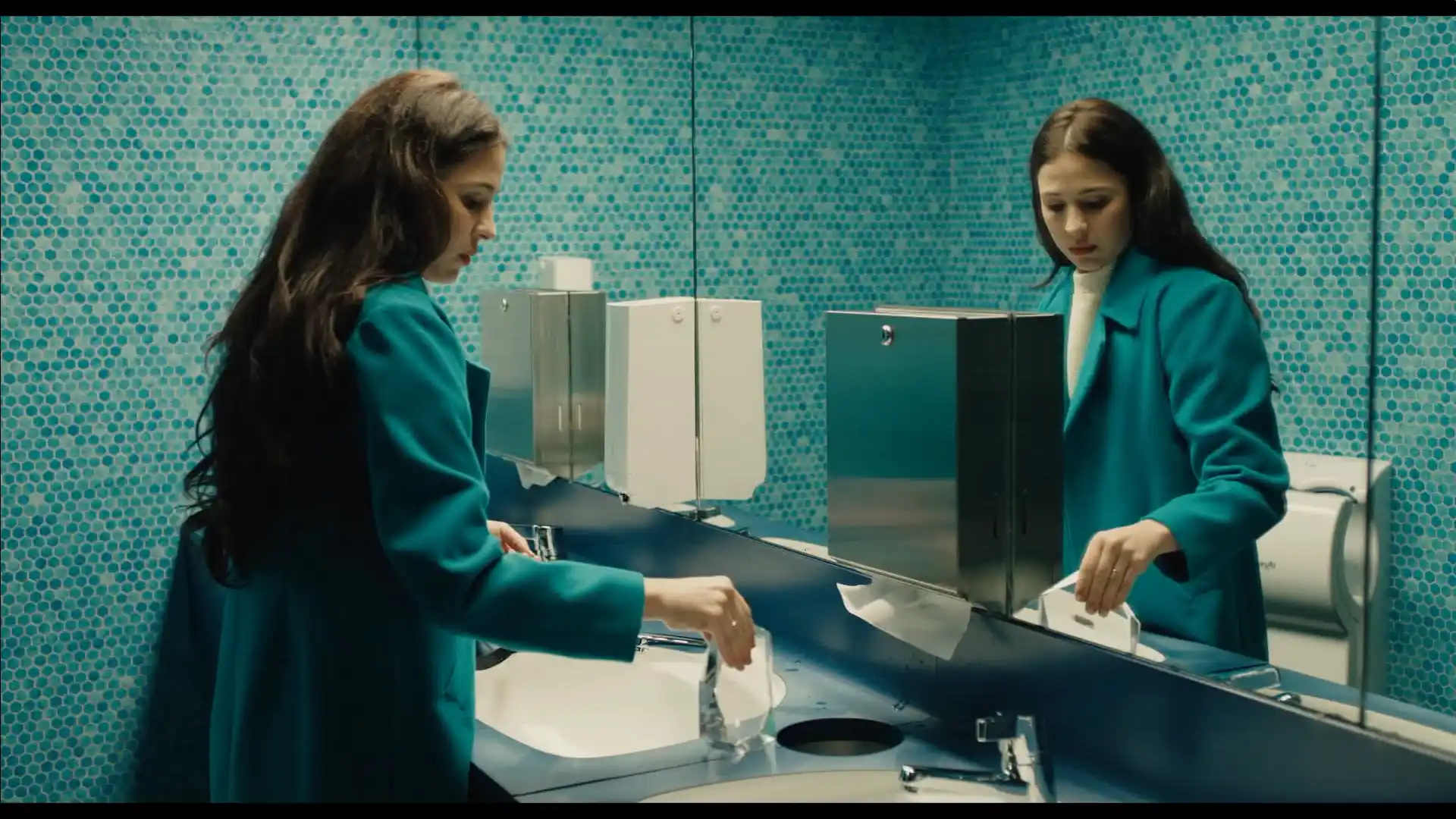
In her third film Milagros Mumenthaler takes an urge as the starting point, an automatic movement that suddenly shakes the life of an Argentinian stylist. Lina jumps into a river during a business trip to Switzerland, and when she returns to Buenos Aires, she realizes that nothing is the same. Embracing the adrift female characters representation models, characteristic of modernity, from Antonioni to Ackerman, the Argentinian filmmaker puts in a critical regard to the contemporary’s society neo-liberal unease, which she builds within the inner world of her own main character. That is why the mise-en-scene is led by her thought’s uncertainty, through touches of lyricism and nuances of fantasy and mystery that conform the narrative corridors of the film and expose Lina’s confrontation with a cog in the bourgeois social machine, a cosmos that, all of a sudden, doesn’t work anymore for her. Mumenthaler depicts that state of identity-related vulnerability arising from an existential imbalance with everyday life, but also corporal and primal, through the sudden hatred to water that Lina is suffering and that gets worse at times The conflict between the outside and the inner world, where she doesn’t acknowledge herself and seems to vibrate at a different frequency than the environment she’s inhabited ever since, is conditioned by the female experience. In Las Corrientes a repeated questioning of current marriage protocols and expectations and motherhood lays under, establishing at the same time a relation with fashion and beauty to which the main character belongs. To this regard, a special attention is reserved to silences and spaces constituting that everyday life that has completely lost its familiarity, aligned with works by filmmakers like Christian Petzold or Angela Schanelec, who have constantly represented the micro-structures of a capitalism that has definitively intervened the vital schemes of 21st century’s bourgeoisie. NACHO ÁLVAREZ
BIOGRAPHY

Read more
Milagros Mumenthaler was born in Córdoba, Argentina, in 1977, but spent her childhood and youth in Switzerland, where her family was forced into exile. In the 1990s, she decided to return to her home country to enroll at the University of Cinema in Buenos Aires, where she graduated in 2000. She then launched her career as a filmmaker with a series of talented short films in which she began to develop her unique vision. Her debut with ¿Cuándo llega papá? (2000) and Cape Cod (2003) was followed by El patio (2004), a beautiful chamber piece that won an award at BAFICI, in which Mumenthaler’s unique creative universe emerges, defined by a decidedly feminine narrative voice. In 2007, she was selected by a jury headed by Laurent Cantet to join Cinéfondation, the Cannes Film Festival’s artist residency program where Lucrecia Martel, Jaime Rosales or László Nemes took their first steps. That same year, her short film Amancay (2007) was selected for the Locarno Film Festival, a competition that established her international reputation with her first feature film, Abrir puertas y ventanas (2011), which won five awards, including Best Film. In 2017, under the distribution of NUMAX Distribución, Milagros Mumenthaler made her Spanish film debut with La idea de un lago, a moving portrait of loss and memory that was selected for major festivals such as Locarno and San Sebastián. A miraculous and beautiful film that is sure to delight Spanish audiences. Las corrientes is her third film.
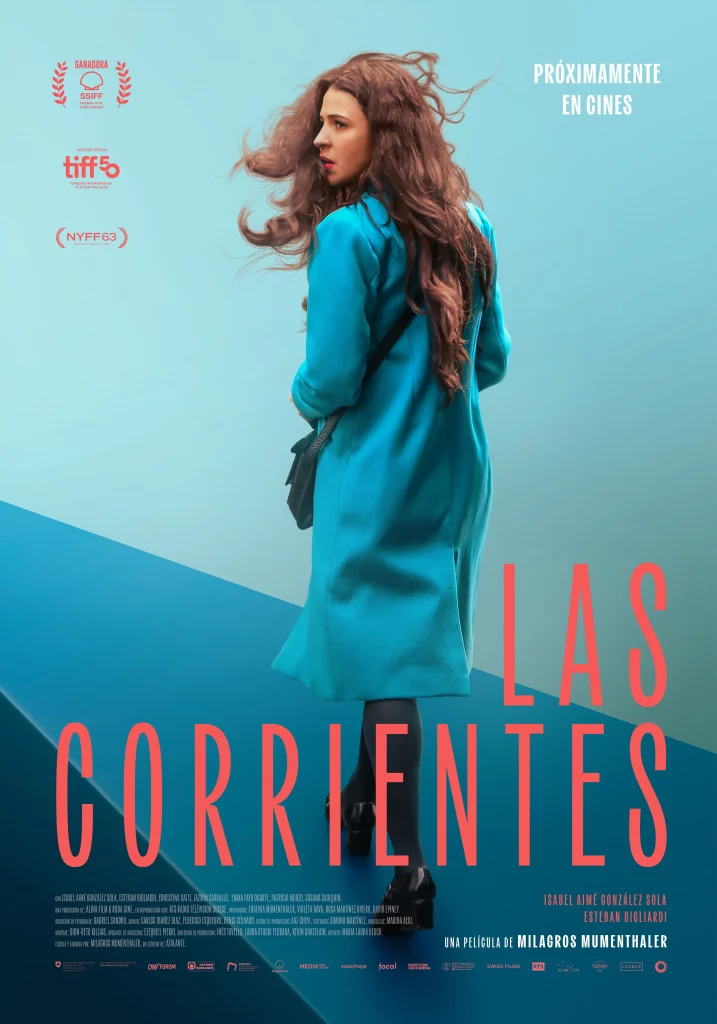



GUION: Milagros Mumenthaler
PRODUCCIÓN: Eugenia Mumenthaler, David Epiney, Violeta Bava, Rosa Martínez Rivero. Alina Film y Ruda Cine
FOTO: Gabriel Sandru
EDICIÓN: Guion-Reto Killias
SONIDO: Carlos Ibáñez, Federico Ezquerro, Denis Séchaud
INTÉRPRETES: Isabel Aimé Gonzalez-Sola, Esteban Bigliardi, Claudia Sánchez, Ernestina Gatti, Jazmín Carballo, Patricia Mouzo, Susana Saulquin