

Sección Oficial 2024
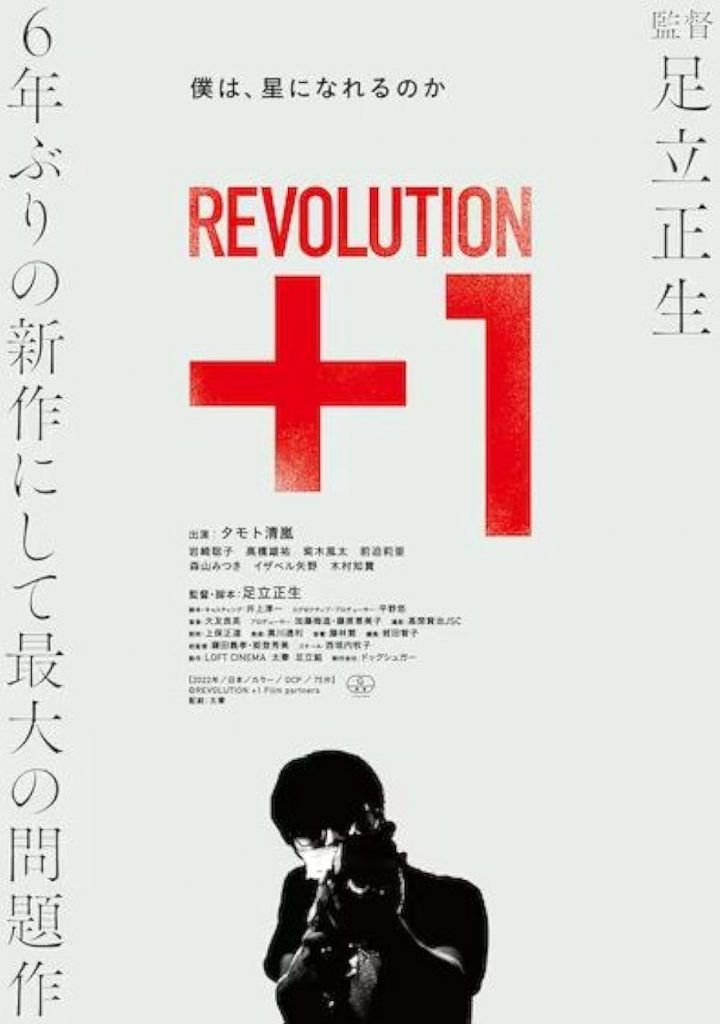
REVOLUTION+1
Masao Adachi | 2022 | 80'
SYNOPSIS
BIOGRAPHY

Read more
Born in 1939, Masao Adachi was placed under the limelight for Closed Vagina, an independent film produced while he was a student of the Department of Film, Faculty of Arts, Nihon University. After dropping out of university, he joined WAKAMATSU Koji’s independent production and mass produced scripts for radical pink films that took on sex and revolution as their central themes. He debuted as a director in 1966 with Abortion. On the way back from Cannes Film Festival in 1971, he went to Palestine with WAKAMTSU Koji, joined the guerilla faction of the Popular Front for the Liberation of Palestine and shot and directed The Red Army / PFLP: Declaration of World War that depicted the daily lives of the Palestinian guerilla soldiers. Joining the Japanese Red Army led by SHIGENOBU Fusako in 1974, he was marked by Interpol as a wanted person. In 1997, he was placed in detention at the Roumieh prison in Lebanon. After his prison term expired in March 2000, he was deported back to Japan. In 2006, he sat back down on the director’s chair for the first time in 35 years to make Prisoner/Terrorist, a film on Japanese Red Army member OKAMOTO Kozo, relaunching his artistic career in Japan. He has also directed Artist of Fasting (2016), an adaptation of the famous Kafka’s story to modern Japan.
Multimedia


Critical text
An old guerrilla fighter is still standing. He is Masao Adachi, a living legend of political art and one of the most important creators of Japanese cinema. A collaborator of Kōji Wakamatsu, Nagisa Ôshima, the director of masterpieces as Wan (1961) and A.K.A. Serial Killer (1969) and a militant for the liberation of the oppressed, Adachi represents the energy and drive of the most daring and non-conformist cinema. In his permanent defiance of the dominant order, he committed himself in the early seventies to the Japanese Red Army and, renouncing to work for the cinema, disappeared from circulation. Between 1971 and 1999 he lived in Lebanon, collaborating with the Palestine Liberation Front, until he was arrested and deported to Japan. After spending some time under house arrest, he resumed filmmaking with the same vigour and audacity as before. His latest burst is a portrait of Tetsuya Yamagami, the man who on 8 July 2022 shot dead former prime minister Shinzo Abe at an election campaign rally. Finished in barely two weeks, Revolution+1 mixes fiction and documentary to question the very foundations of Japanese democracy, while approaching the figure of Yamagami without any kind of prejudice. An abysmal, complex, and unabashedly controversial film, Revolution+1 shocks us with pertinent questions about our freedom and our ability to change an unjust world. It also certifies that the ideals that animated and still animate Adachi are more necessary and more alive than ever. GABRIEL DOMÉNECH
Technical Sheet
Prod: Emiko Fujiwara, Umezou Katoh. Guion: Junichi Inoue, Masao Adachi.
Music: Yoshihide Otomo.
Edición: Tomoko Hiruta.
Foto: Kenji Takama.
Intérpretes: Soran Tamoto, Satoko Iwasaki, Yusuke Takahashi.